

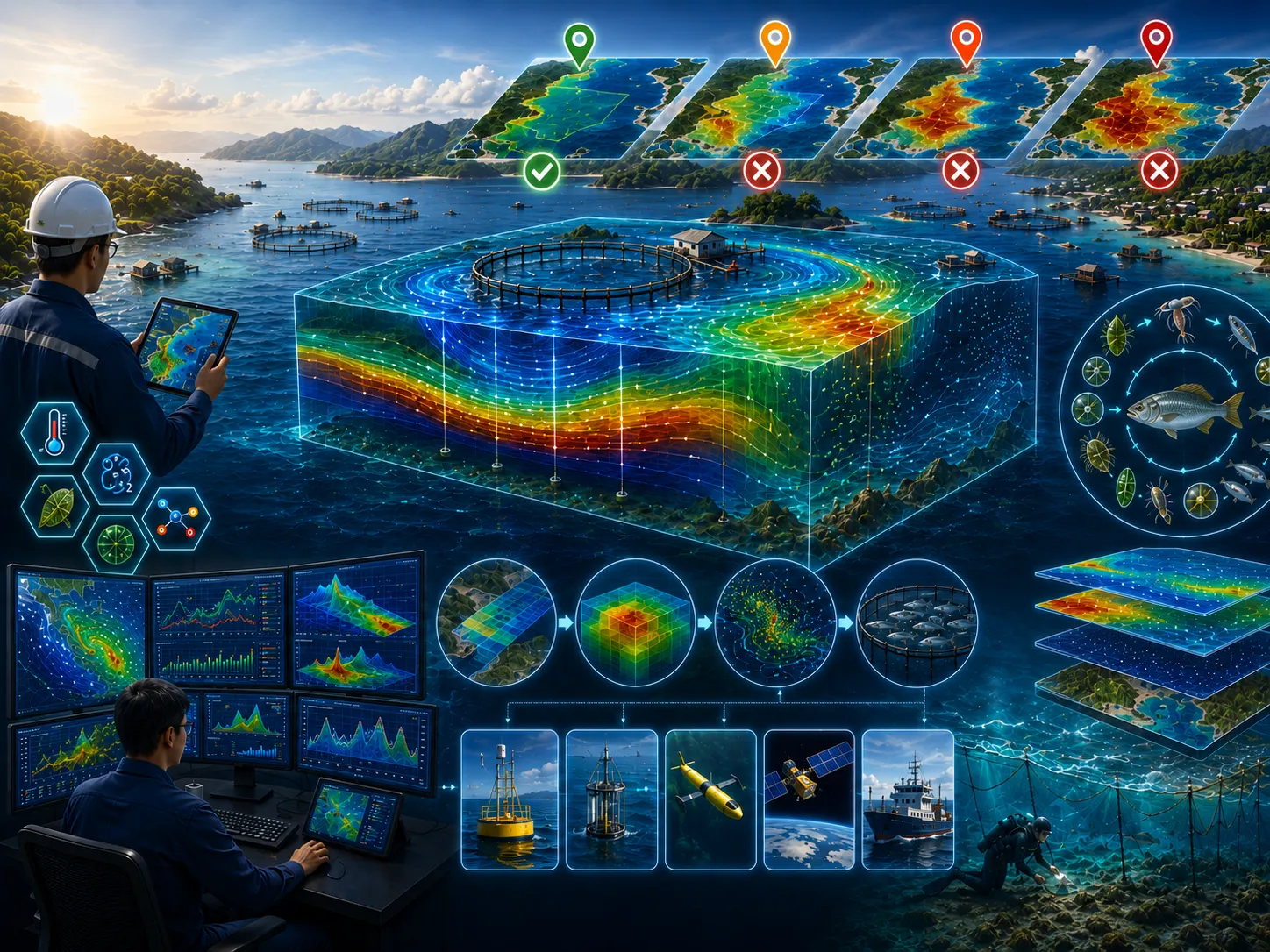
CONTEXTField conditions and systems being assessed
Enter at least two characters.
Naturally, each fish species occupies a habitat that best meets its biological and ecological requirements.
This page includes a one-page leaflet that can be opened in a full-image popup. It helps present the core CORZ service clearly and convincingly during project discussions, executive briefings, and decision-support meetings.
With a more proportional balance between visuals and text, the page feels brighter and more energetic while still keeping the important technical context visible and easy to understand.
Use this leaflet as a concise visual entry point before moving into the more detailed technical explanation.
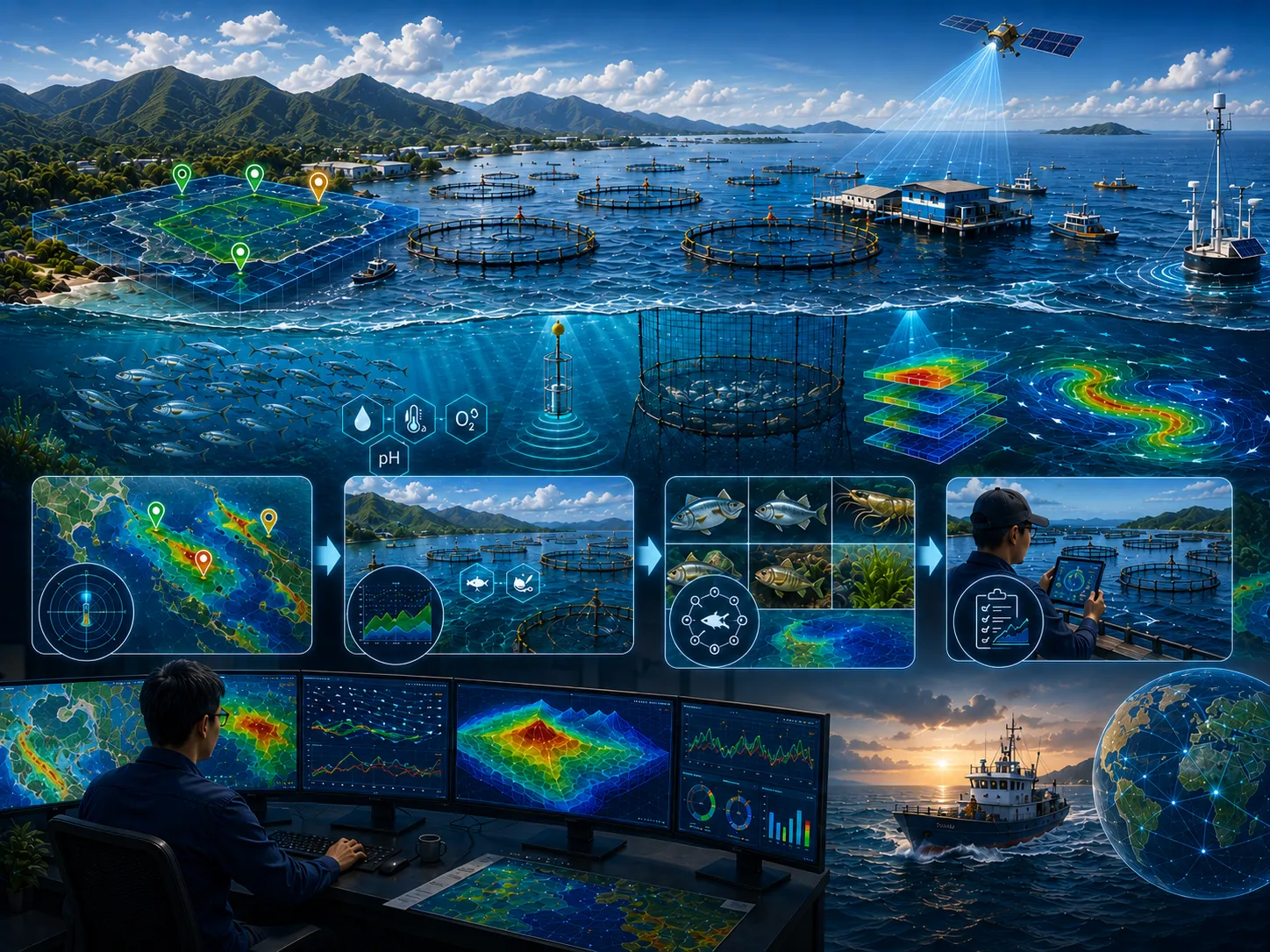

Clarity before a decision is made
Naturally, each fish species occupies a habitat that best meets its biological and ecological requirements.
The key to avoiding these problems is to thoroughly evaluate the environmental characteristics of a potential farming site before selecting a species for cultivation. A comprehensive understanding of local hydrodynamic, physical, chemical, and biological conditions allows decision-makers to determine whether the site is suitable for the target species.
Define the approach, priorities, and actions for marine aquaculture site selection using traceable evidence.
Environmental impact, design failure, operational disruption, uncontrolled cost, and weak assumptions.
Comparable options, quantified risk, and implementable recommendations.
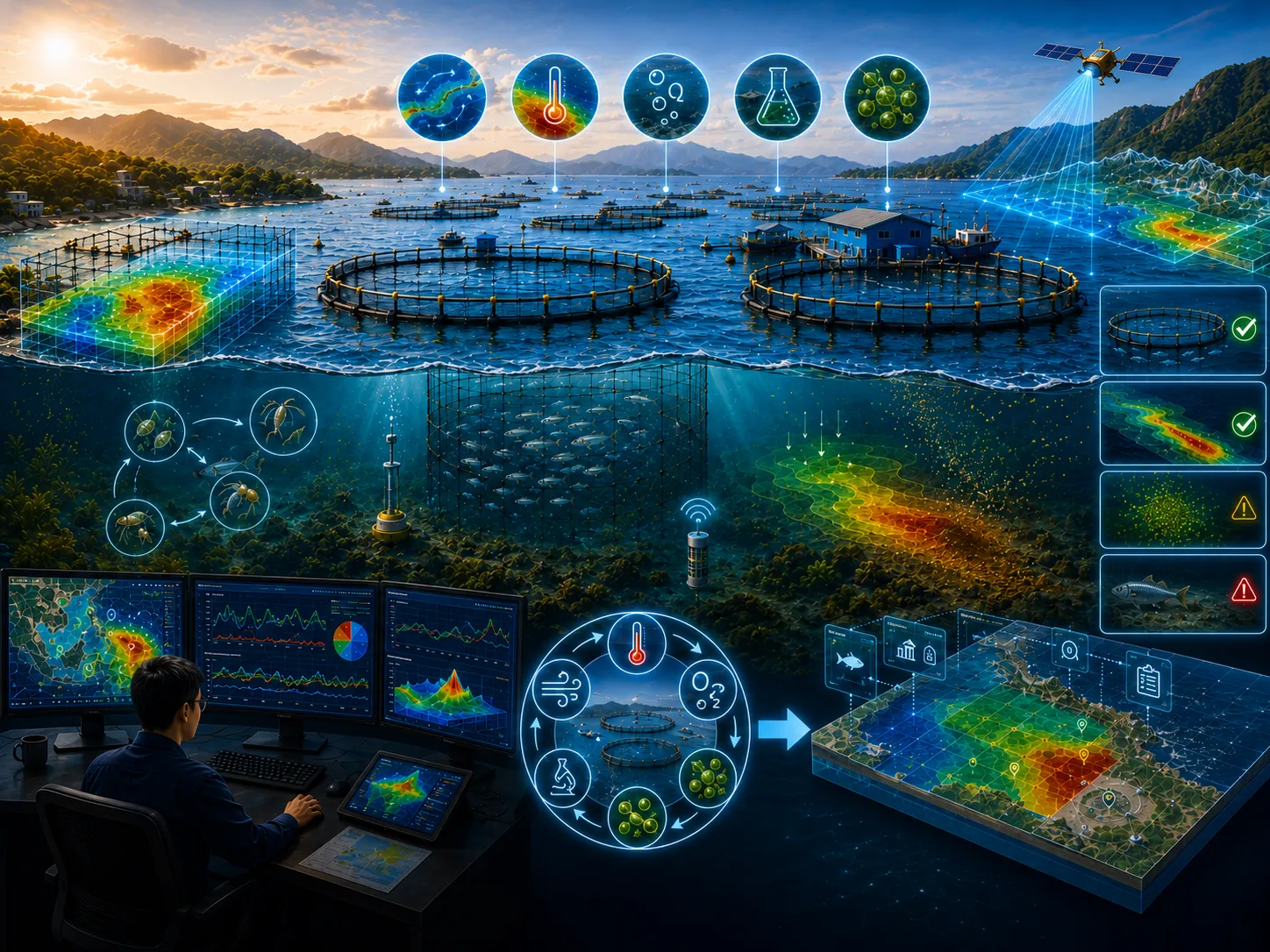
This aspect is assessed to clarify its implications for marine aquaculture site selection.
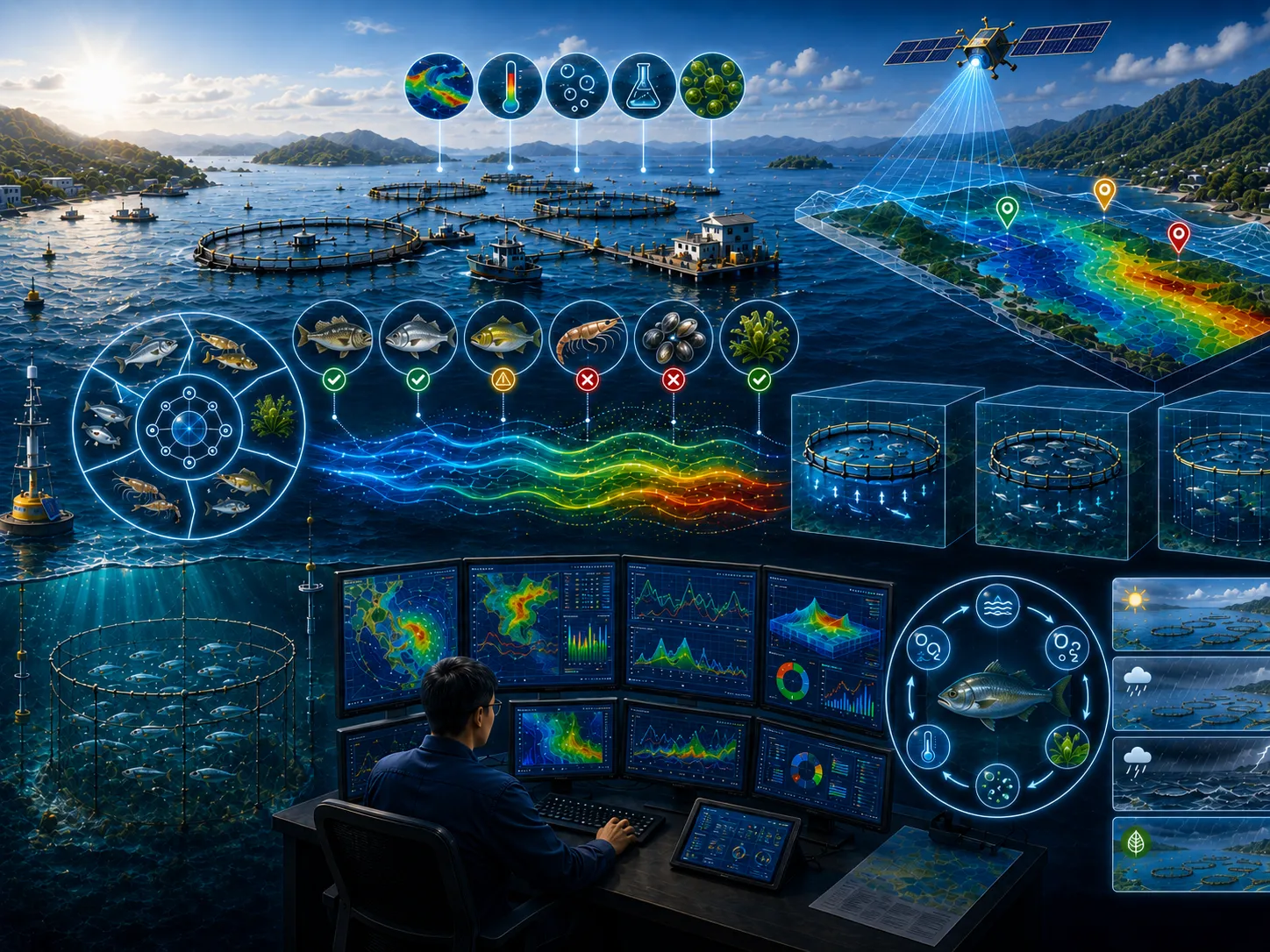
This aspect is assessed to clarify its implications for marine aquaculture site selection.
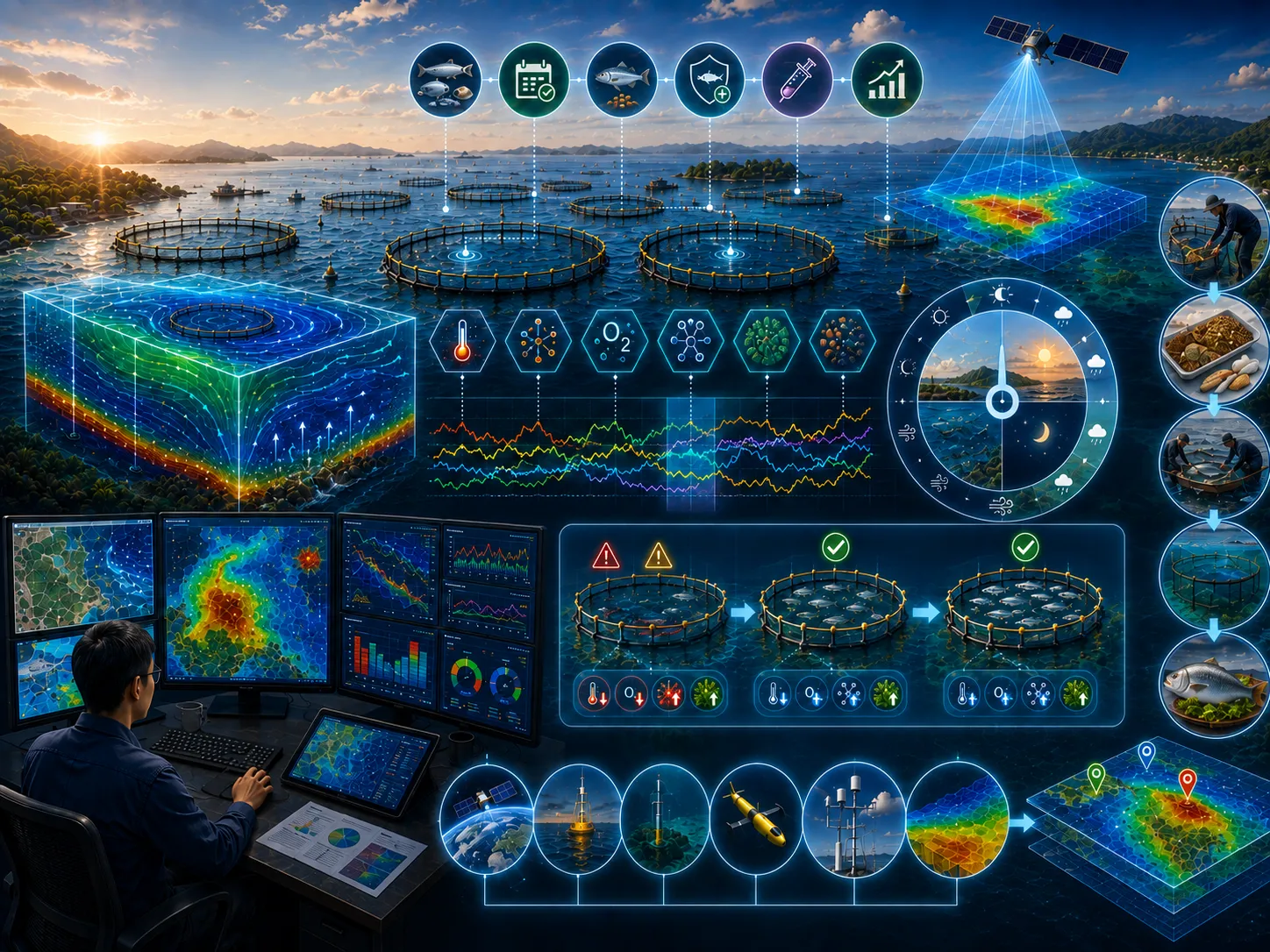
This aspect is assessed to clarify its implications for marine aquaculture site selection.
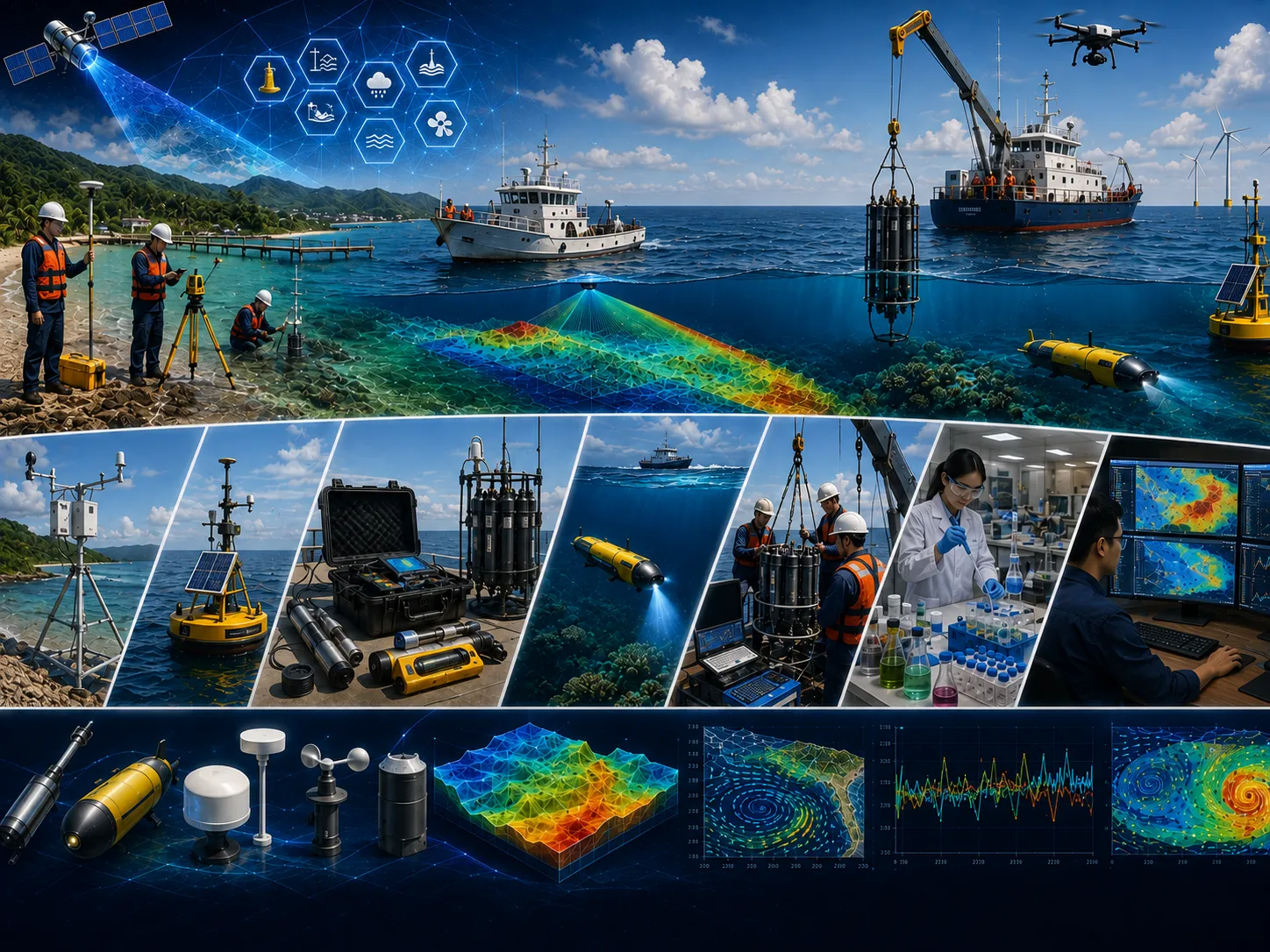
This aspect is assessed to clarify its implications for marine aquaculture site selection.

This aspect is assessed to clarify its implications for marine aquaculture site selection.
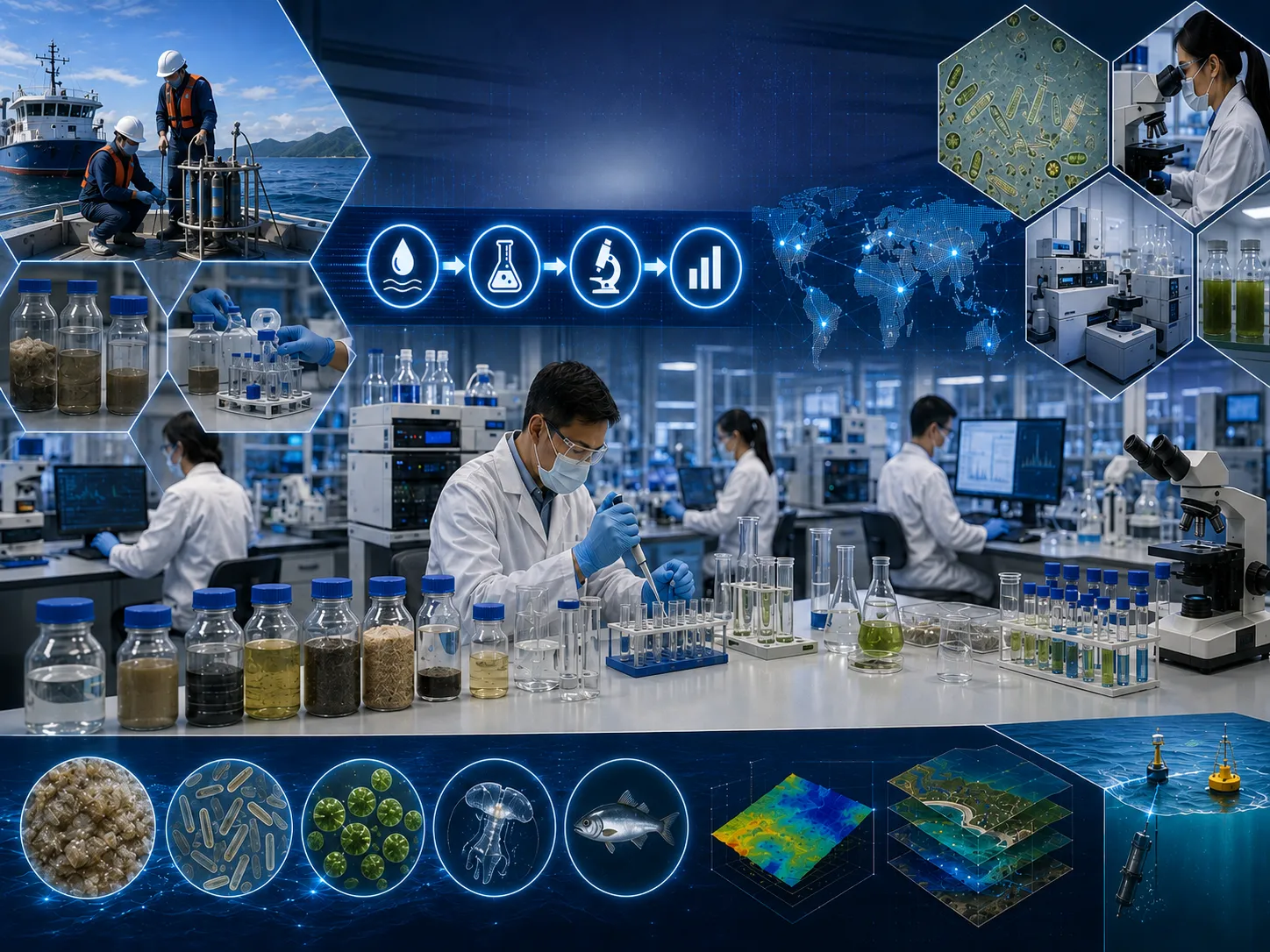
This aspect is assessed to clarify its implications for marine aquaculture site selection.
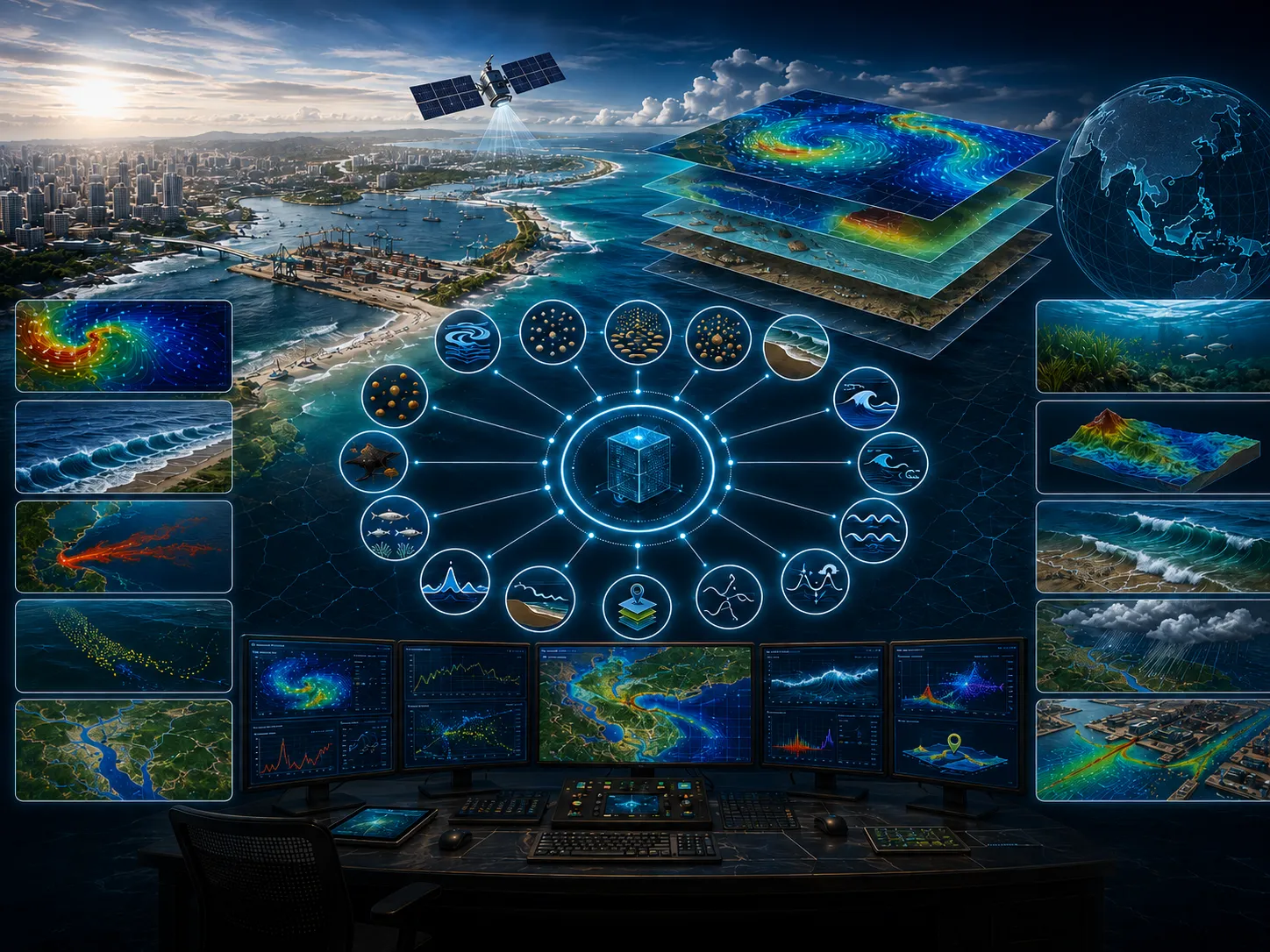
Field surveys, in-situ measurements, laboratory results, historical records, and operating information as required.

Satellite imagery, mapping, spatial analysis, temporal change, and integration of multiple data sources.
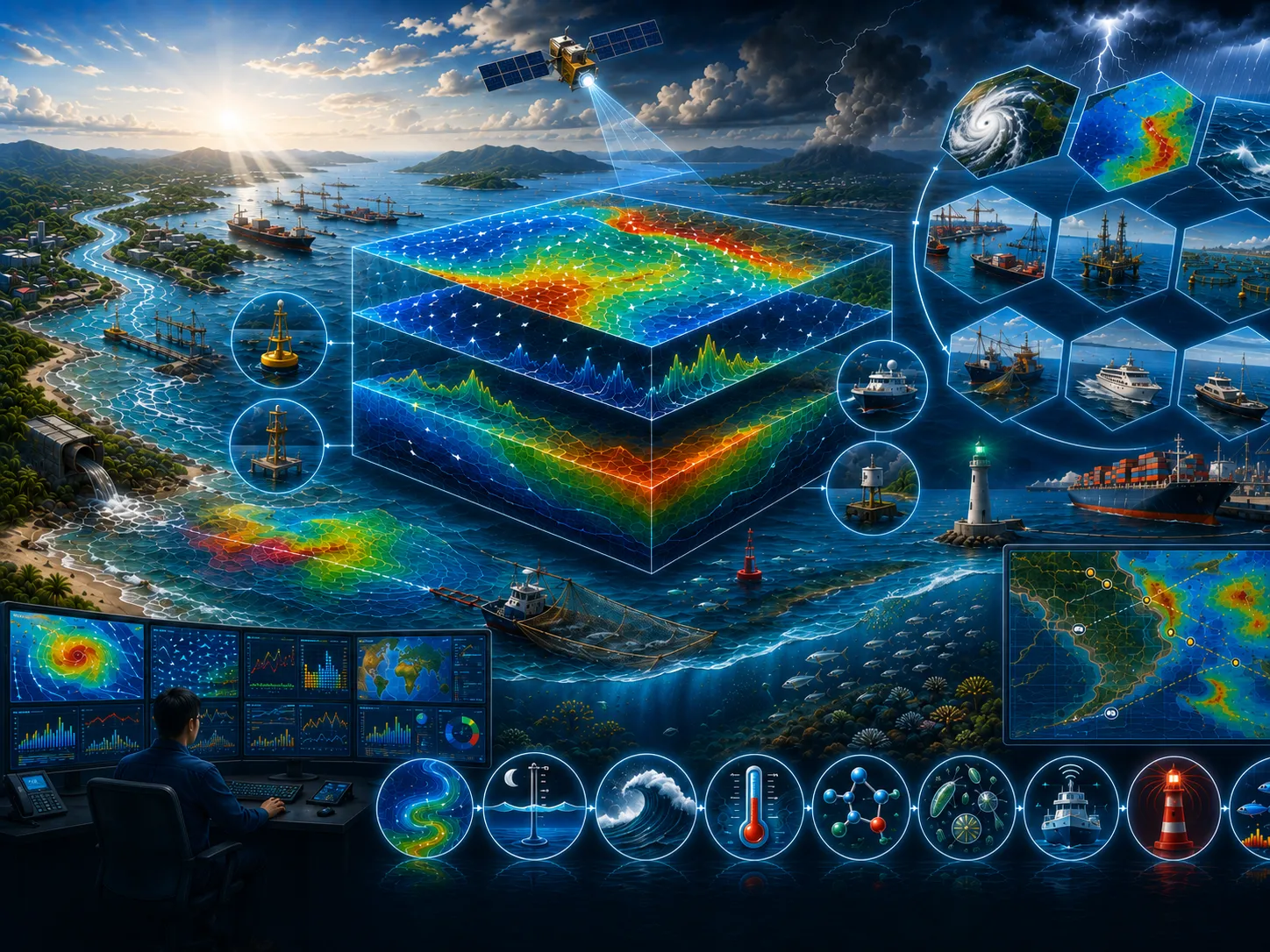
Model setup, calibration, validation, existing–planned–extreme scenarios, and sensitivity analysis.
Metadata, quality controls, assumptions, limitations, data versions, and processing lineage are documented.
Objectives, study area, available data, additional needs, initial risks, and recommended level of detail.
Quality-controlled data, thematic maps, time series, indicators, and comparable visualizations.
Comparison of existing conditions, alternatives, extremes, sensitivities, consequences, and mitigation options.
Methods, results, limitations, recommendations, action priorities, and stakeholder presentation materials.
Assumptions, data, variability, and limitations are stated so decision risk is not hidden.
Alternative locations, designs, operations, or policies are assessed using consistent indicators.
Data needs and analysis depth are proportionate to risk so resources are used efficiently.
Findings and recommendations are transparent for technical, management, regulatory, and partner review.
Objectives, users, location, project phase, problems, constraints, and the decision to support.
Methods, data, surveys, models, schedule, team, deliverables, review gates, and resource estimate.
Collection, inspection, harmonization, documentation, and data-sufficiency assessment.
Processing, modeling, validation, option comparison, sensitivity, and risk evaluation.
Maps, report, executive brief, presentation, supporting data, and follow-up plan.
Naturally, each fish species occupies a habitat that best meets its biological and ecological requirements. Likewise, aquaculture species should be cultivated in locations that provide optimal environmental conditions for growth, health, and survival. Selecting an appropriate farming site is essential for maximizing productivity and long-term profitability. One of the most common causes of failure in marine aquaculture is choosing a site that is unsuitable for the target species. In many cases, developers secure a farming area and select a high-value species based on market demand. After investing in infrastructure, stocking juveniles, and achieving successful initial harvests, subsequent production cycles often experience repeated failures due to environmental conditions that were not fully understood or anticipated, ultimately leading to significant financial losses.
The key to avoiding these problems is to thoroughly evaluate the environmental characteristics of a potential farming site before selecting a species for cultivation. A comprehensive understanding of local hydrodynamic, physical, chemical, and biological conditions allows decision-makers to determine whether the site is suitable for the target species. By integrating advanced numerical modeling into the site selection process, these evaluations can be performed more accurately, efficiently, and scientifically, providing a reliable basis for investment decisions.
Modeling technology enables rapid and comprehensive assessment of candidate aquaculture sites by simulating the environmental factors that influence fish growth and survival. These factors include water circulation, temperature, salinity, dissolved oxygen, nutrient availability, and other physical, chemical, and biological parameters. Model simulations provide spatial and temporal distributions of these variables under different seasonal and operational conditions, allowing stakeholders to determine whether environmental conditions remain within the optimal range for the cultured species throughout the year.
Modeling scenarios are developed by considering alternative farming locations, the key environmental parameters required by the target species, and the temporal variability of the aquatic environment. In addition, numerical models can evaluate the potential impacts of accidental pollutant discharges or other environmental disturbances, as well as the resulting physical, chemical, and biological interactions within the ecosystem. By identifying these risks in advance, operators can establish effective mitigation strategies and standard operating procedures to minimize environmental impacts and economic losses.
In coastal spatial planning, designated marine areas are often allocated for aquaculture development, or large-scale aquaculture projects are proposed by the fisheries industry.
Learn more →Every aquatic environment has unique characteristics that distinguish it from other water bodies.
Learn more →Environmental conditions at marine aquaculture sites vary continuously over time, directly influencing the growth, health, and productivity of cultured species.
Learn more →The CORZ team will review the objective, scope, data availability, risk level, schedule, and required outputs to prepare a proportionate approach.
Share the location, objectives, key challenges, available data, and expected outputs. The CORZ team will help define a proportionate technical approach.