
CONTEXTField conditions and systems being assessed
Enter at least two characters.
Reliable information on marine environmental conditions is essential for the engineering, design, and construction of coastal infrastructure—including residential developments, hotels, tourism facilities,…
This page includes a one-page leaflet that can be opened in a full-image popup. It helps present the core CORZ service clearly and convincingly during project discussions, executive briefings, and decision-support meetings.
With a more proportional balance between visuals and text, the page feels brighter and more energetic while still keeping the important technical context visible and easy to understand.
Use this leaflet as a concise visual entry point before moving into the more detailed technical explanation.


Clarity before a decision is made
Reliable information on marine environmental conditions is essential for the engineering, design, and construction of coastal infrastructure—including residential developments, hotels, tourism facilities,…
The primary environmental factors influencing structural strength include wave energy, sea-level dynamics, sediment transport processes, water properties, and hydrodynamic circulation patterns. Incorporating these factors into the engineering design process significantly improves structural integrity, operational reliability, and service life while reducing maintenance requirements and the risk of structural failure.
Define the approach, priorities, and actions for offshore structure strength using traceable evidence.
Environmental impact, design failure, operational disruption, uncontrolled cost, and weak assumptions.
Comparable options, quantified risk, and implementable recommendations.
This aspect is assessed to clarify its implications for offshore structure strength.
This aspect is assessed to clarify its implications for offshore structure strength.
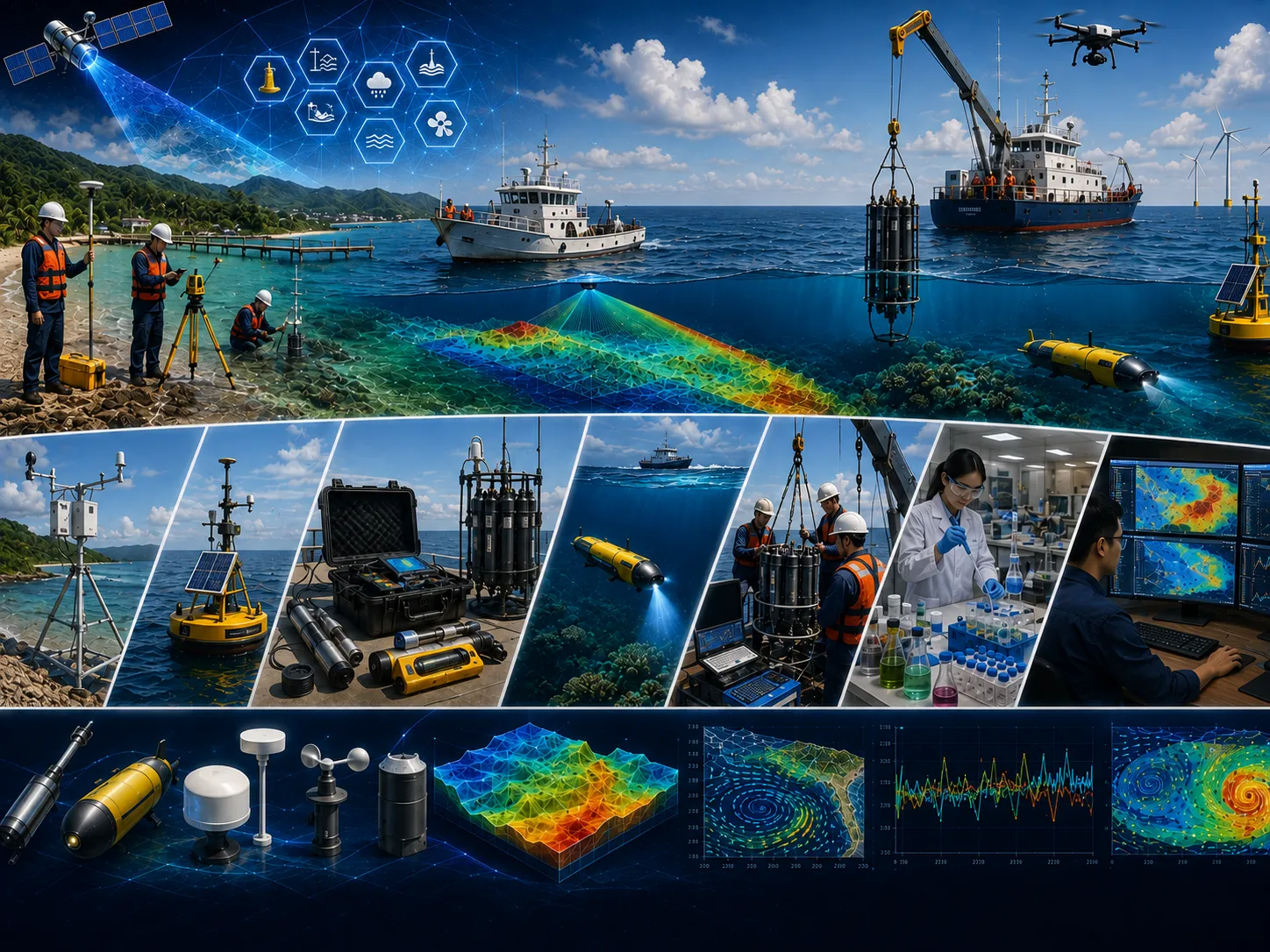
This aspect is assessed to clarify its implications for offshore structure strength.

This aspect is assessed to clarify its implications for offshore structure strength.

This aspect is assessed to clarify its implications for offshore structure strength.
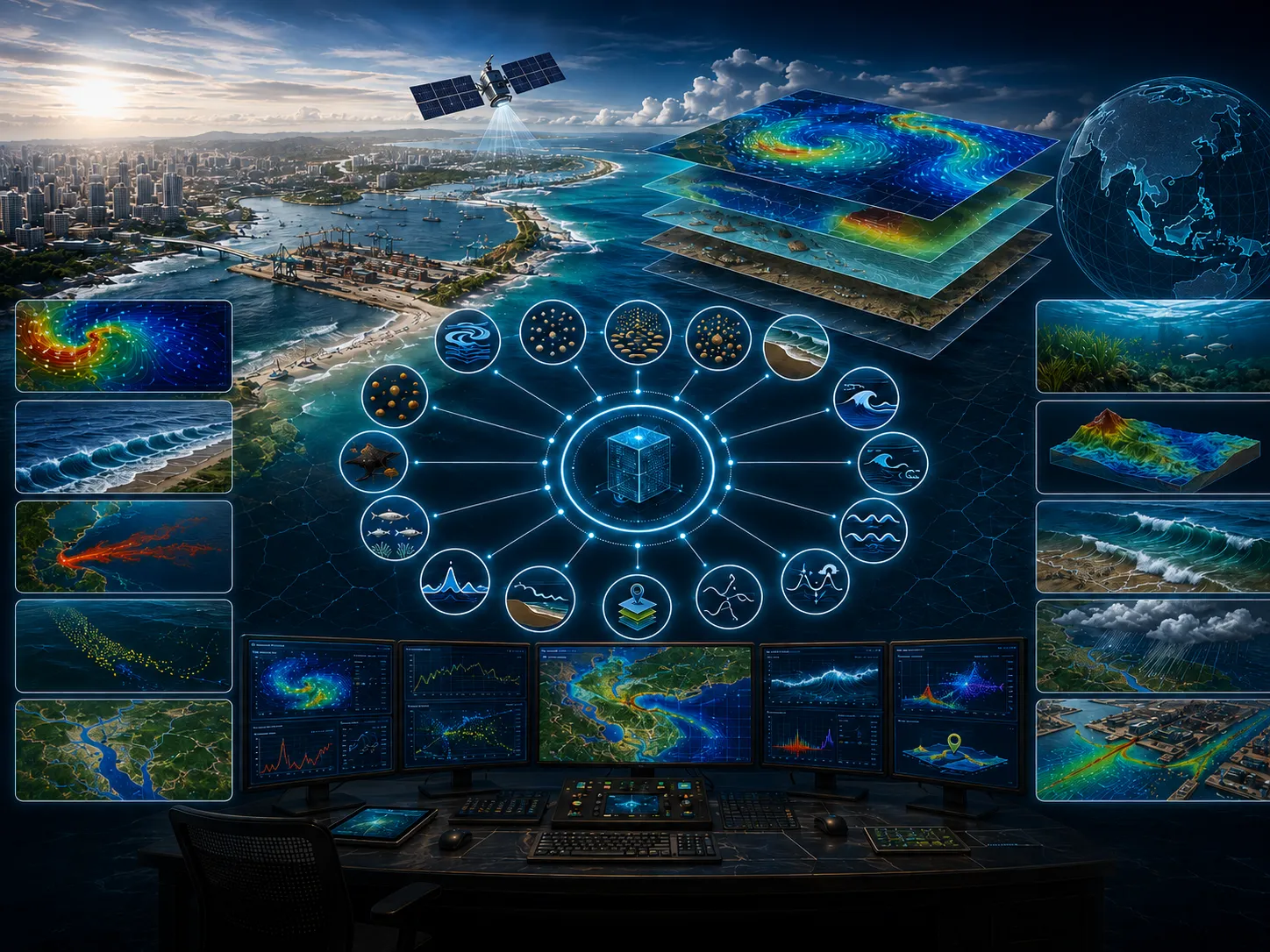
This aspect is assessed to clarify its implications for offshore structure strength.

Field surveys, in-situ measurements, laboratory results, historical records, and operating information as required.
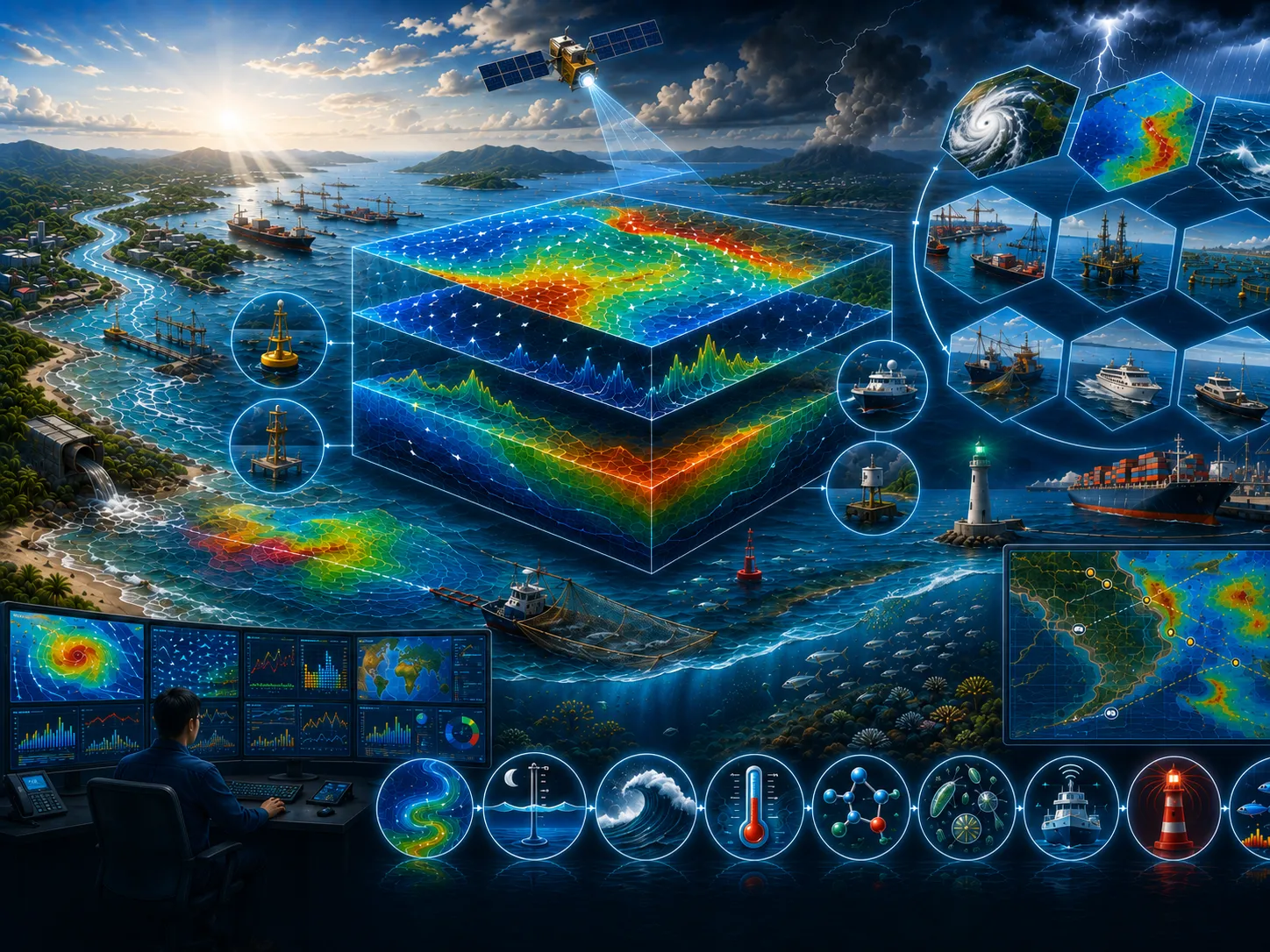
Satellite imagery, mapping, spatial analysis, temporal change, and integration of multiple data sources.
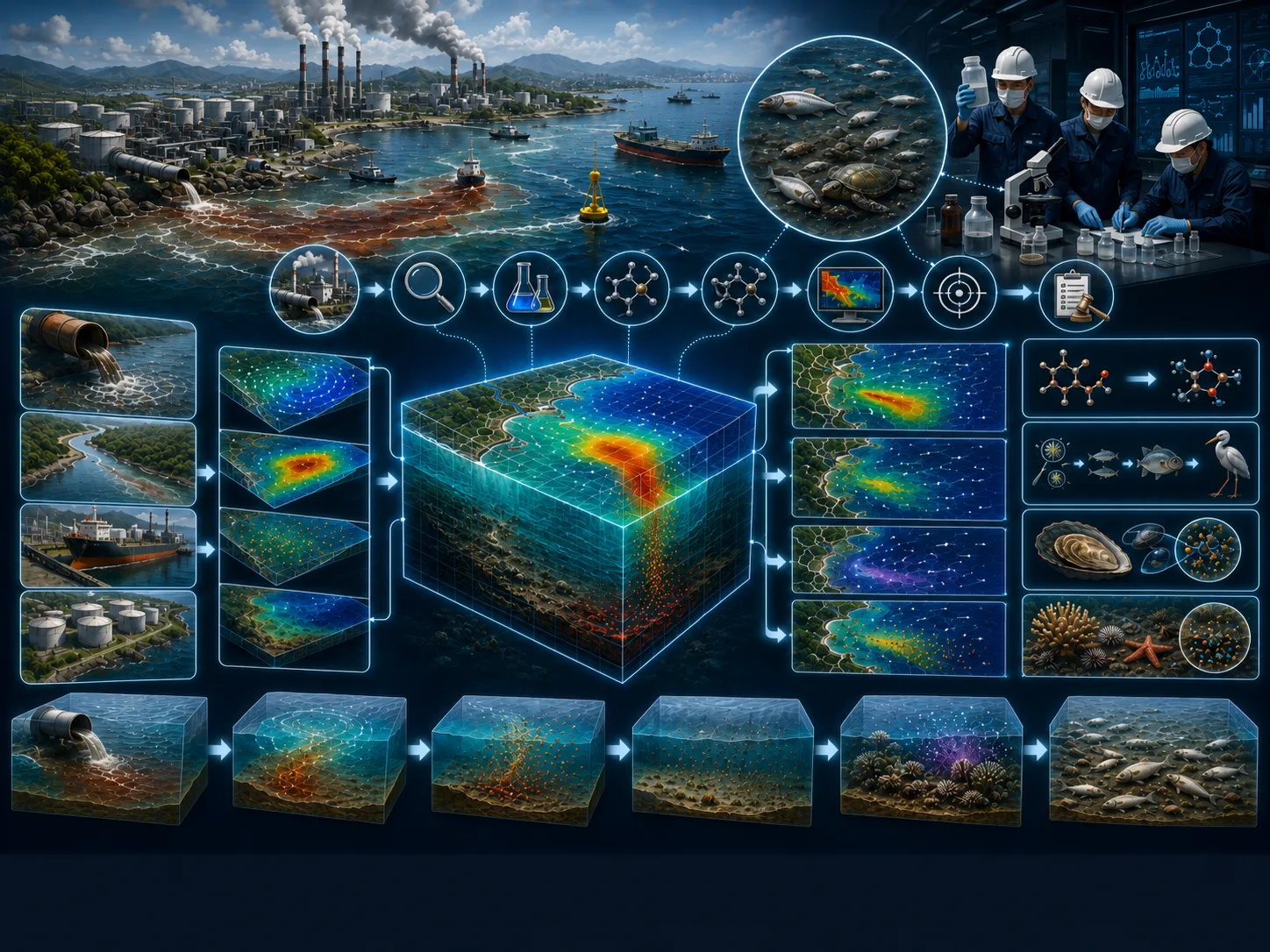
Model setup, calibration, validation, existing–planned–extreme scenarios, and sensitivity analysis.
Metadata, quality controls, assumptions, limitations, data versions, and processing lineage are documented.
Objectives, study area, available data, additional needs, initial risks, and recommended level of detail.
Quality-controlled data, thematic maps, time series, indicators, and comparable visualizations.
Comparison of existing conditions, alternatives, extremes, sensitivities, consequences, and mitigation options.
Methods, results, limitations, recommendations, action priorities, and stakeholder presentation materials.
Assumptions, data, variability, and limitations are stated so decision risk is not hidden.
Alternative locations, designs, operations, or policies are assessed using consistent indicators.
Data needs and analysis depth are proportionate to risk so resources are used efficiently.
Findings and recommendations are transparent for technical, management, regulatory, and partner review.
Objectives, users, location, project phase, problems, constraints, and the decision to support.
Methods, data, surveys, models, schedule, team, deliverables, review gates, and resource estimate.
Collection, inspection, harmonization, documentation, and data-sufficiency assessment.
Processing, modeling, validation, option comparison, sensitivity, and risk evaluation.
Maps, report, executive brief, presentation, supporting data, and follow-up plan.
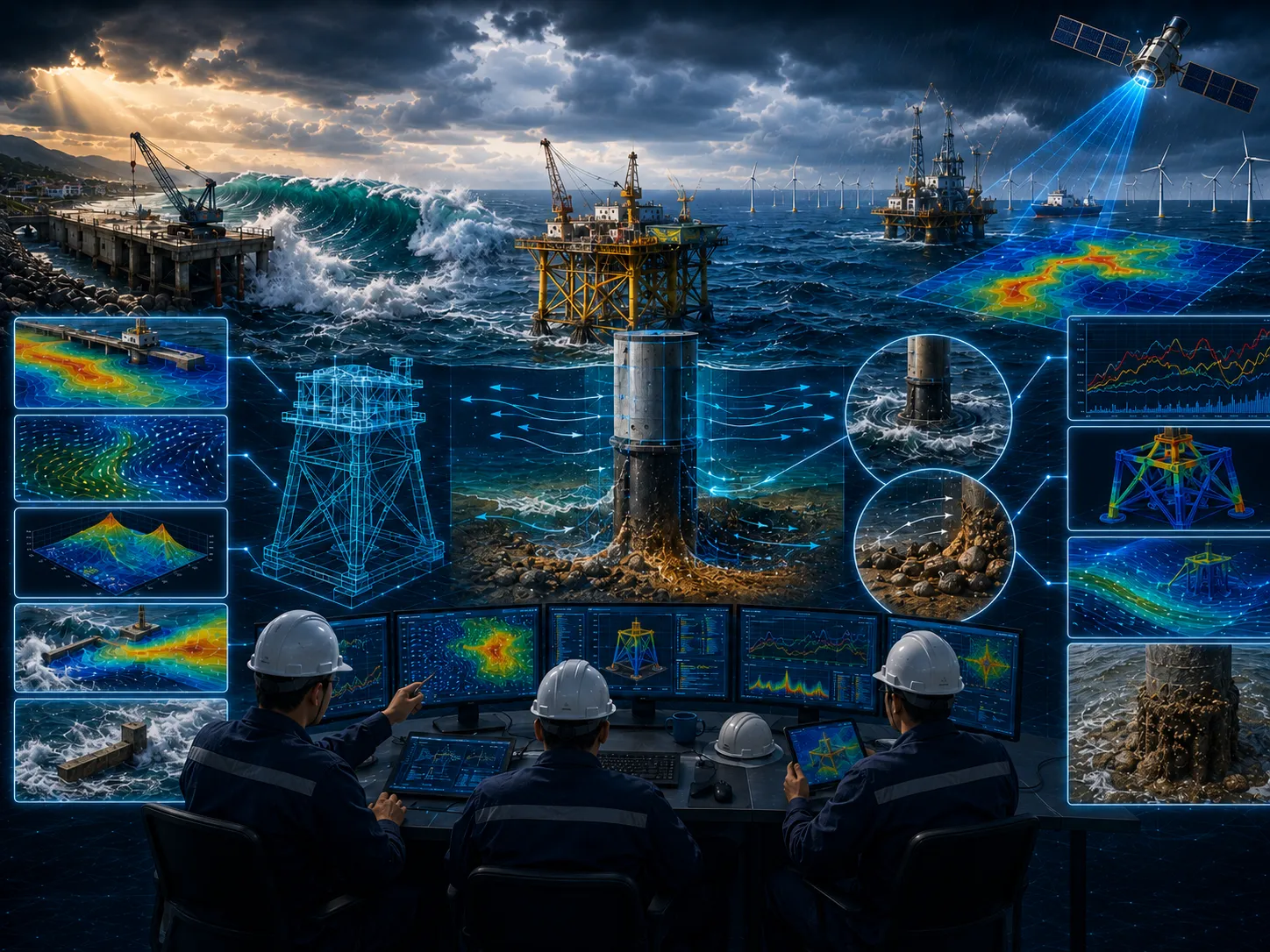
Reliable information on marine environmental conditions is essential for the engineering, design, and construction of coastal infrastructure—including residential developments, hotels, tourism facilities, piers, and ports—as well as offshore facilities such as oil and gas platforms. Understanding these environmental conditions enables engineers to select appropriate construction materials, optimize structural configurations, and design facilities that are both durable and capable of withstanding long-term marine loading.
The primary environmental factors influencing structural strength include wave energy, sea-level dynamics, sediment transport processes, water properties, and hydrodynamic circulation patterns. Incorporating these factors into the engineering design process significantly improves structural integrity, operational reliability, and service life while reducing maintenance requirements and the risk of structural failure.
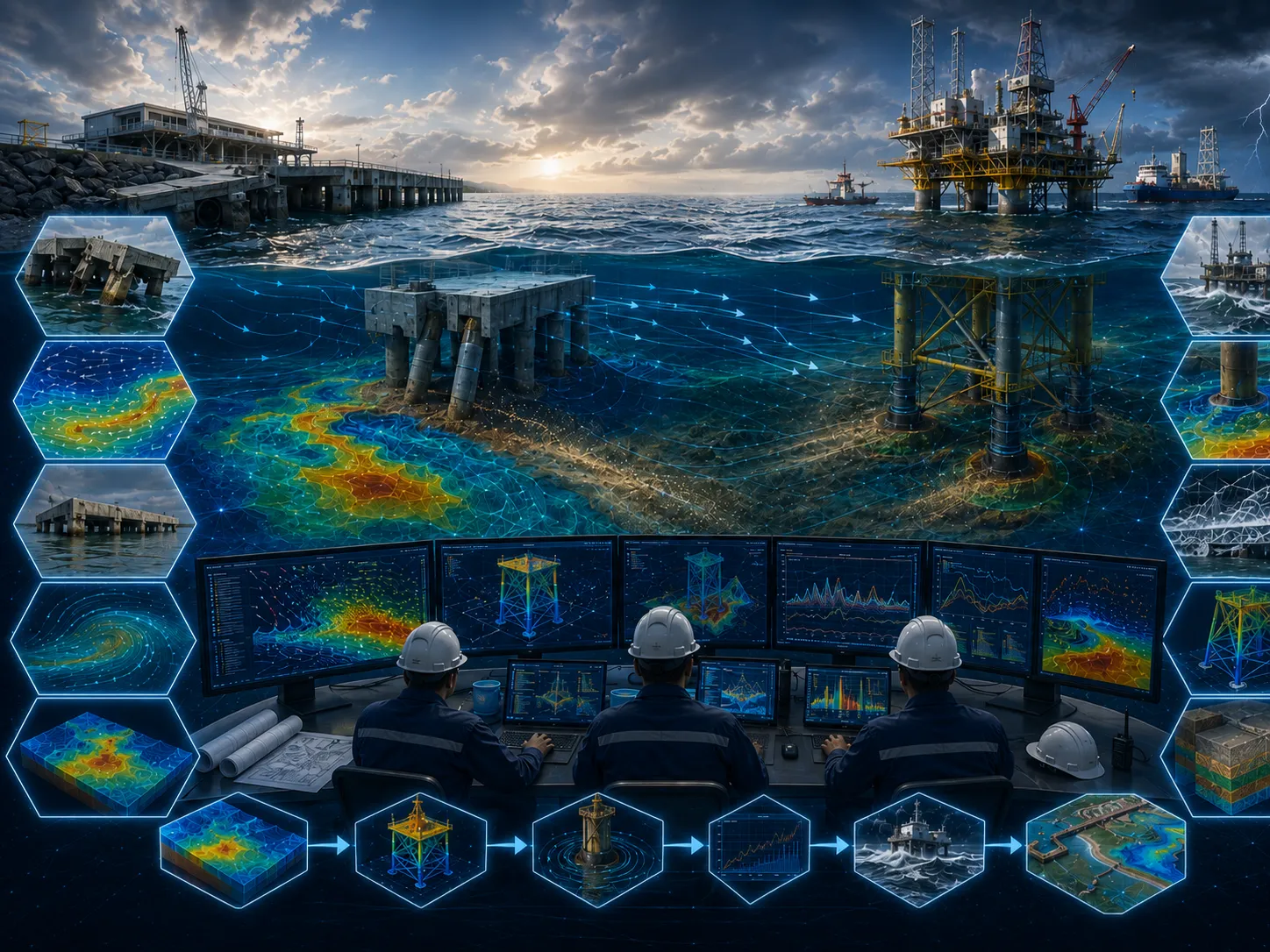
Obtaining comprehensive field observations of marine conditions is often expensive, time-consuming, and technically demanding because it requires long-term monitoring of numerous oceanographic parameters. Advanced numerical modeling provides a practical and cost-effective alternative by simulating a wide range of environmental scenarios over both short- and long-term periods. These simulations allow engineers to evaluate how different marine conditions may affect the structural strength and long-term performance of coastal and offshore infrastructure before construction begins.
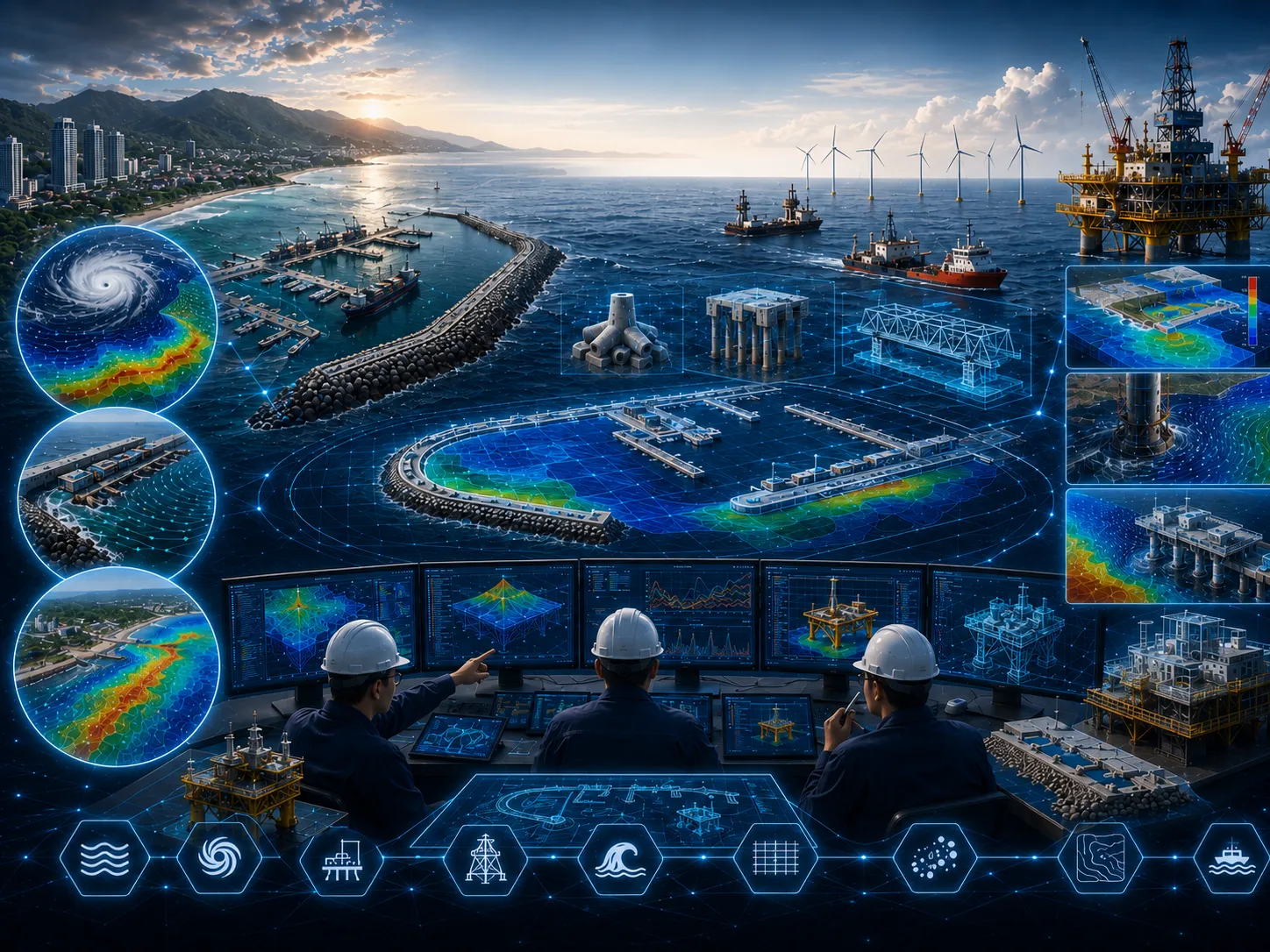
The Hydrodynamic Module is used to simulate circulation patterns, water levels, and current velocities, enabling engineers to incorporate hydrodynamic loading into structural design. A comprehensive suite of wave modeling modules is available to analyze wave characteristics and evaluate wave-induced loads acting on offshore structures. The selection of the appropriate wave model depends on site-specific coastal and offshore conditions.
It is not uncommon to observe coastal structures such as piers and breakwaters developing structural cracks, excessive settlement, or noticeable tilting over time.
Learn more →The design of coastal, riverside, and offshore structures—including residential developments, hotels, tourism facilities, piers, ports, and offshore platforms—is a highly complex engineering process that…
Learn more →The CORZ team will review the objective, scope, data availability, risk level, schedule, and required outputs to prepare a proportionate approach.
Share the location, objectives, key challenges, available data, and expected outputs. The CORZ team will help define a proportionate technical approach.